A pressing question about durability and care
A pressing question that interests every buyer. After all, we want flowers to delight us with their beauty and freshness for as long as possible.
This publication is divided into two parts: the first is about the natural durability of different flowers, and the second is about useful tips and practical care recommendations that can be used to extend the life of a bouquet and preserve its freshness for as long as possible.
Natural Durability of Flowers
The "life" of cut flowers with daily vase washing, water changes, stem trimming by 0.5 cm, and maintaining the correct temperature:
- Chrysanthemum (the center of the bud should be green): 7–30 days, at a temperature of 5–21°C.
- Carnation: 7–30 days, at a temperature of 5–21°C.
- Alstroemeria: 14–21 days, at a temperature of 15–30°C.
- Anthurium: 14–21 days, at a temperature of 15–30°C.
- Chamomile: up to 7 days.
- Rose: 7–30 days, at a temperature of 5–21°C.
- Lily (with opening buds): 7–15 days, at a temperature of 15–25°C.
- Gerbera (the center of the bud is green, without pollen): 14–21 days, at a temperature of 15–25°C.
- Hydrangea (in packaging or by spraying the foliage): 14–21 days, at a temperature of 5–25°C.
- Eustoma (with buds): 14–30 days, at a temperature of 15–30°C.
- Sunflower (without pollen): 7–14 days.
- Strelitzia: 14–30 days, at a temperature of 5–30°C.
- Freesia (depending on the number of buds): 7–21 days, at a temperature of 5–25°C.
- Tulip: 7–14 days.
- Iris (unopened buds): up to 10 days.
- Cabbage (Brassica): 7–14 days.
- Anthirrinium, Delphinium: 7–14 days.
- Amaryllis: up to 14 days.
- Gladiolus (green buds): up to 14 days.
- Orchid: 14–21 days, at a temperature 21°C.
- Peony: up to 7 days.
- Hyacinth: 7–14 days, at 5–15°C.
Practical Care Recommendations
Preparing Stems and Vase
- Remove the lower leaves from the stem: they must be above the water level, otherwise rotting will begin.
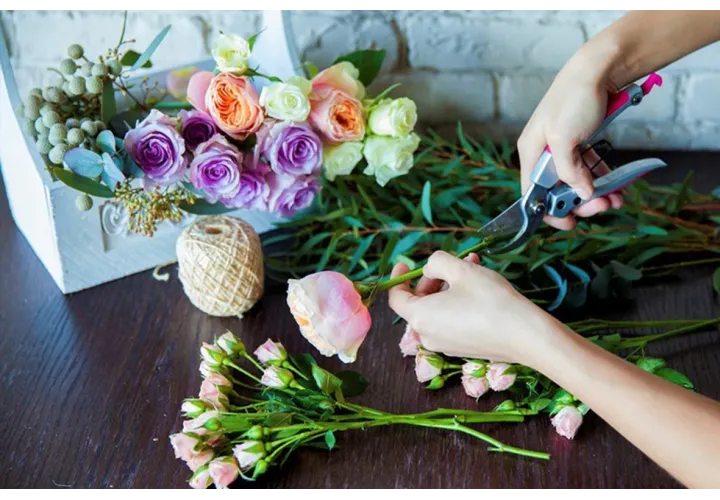
- A slanted cut increases the absorbent surface and improves water access to the leaves and buds.
- Maintain the integrity of the bark and the outer layer of the stem for better water flow to the buds and leaves.
- Not only do you need to change the water in the vase, but you also need to wash the inside surface of the vase; You can use a 1:10 bleach solution.
Temperature and Water
- Chlorinated and cold water (10–15°C) slow down flower aging.
- Warm water (over 40°C) and vodka accelerate development: budding flowers open, while opened flowers fade faster.
Bouquet Hygiene
- Faded flowers and dry leaves contribute to stem rot and should be removed.
- The water level in the vase should reach the top of the bouquet components.
Packaging and Transportation
- Packaging protects flowers like clothing; it's not recommended to remove it immediately.
- In the store, flowers are kept at the right temperature and humidity and "sleep"; As the temperature rises, they "wake up," the leaves evaporate moisture more actively, and the buds increase their water absorption.
- At temperatures below 1–3°C, flowers can freeze and become frostbitten.
- The packaging should remain above the bunch and not fall into the water.
- The packaging maintains the bouquet's microclimate, preventing condensation on the stems, leaves, and buds when external conditions change.
Refreshing the Cut
After bringing the bouquet home, refresh the cut under running water or immediately before placing it in a vase—this opens the micropores in the stem and improves the moisture supply to the buds and leaves.
Results
We hope that these recommendations will help—by applying at least some of them, you can significantly extend the life of your bouquet life to flowers.

